
Guest blog by Sholom—
For those of us walking a path of healing, it’s easy to get caught in a loop of urgency. We want to feel better now. We want to move forward, shed old patterns, find peace, love well, and live free. Urgency can feel like a push toward survival, but healing, at its heart, asks us to slow down.
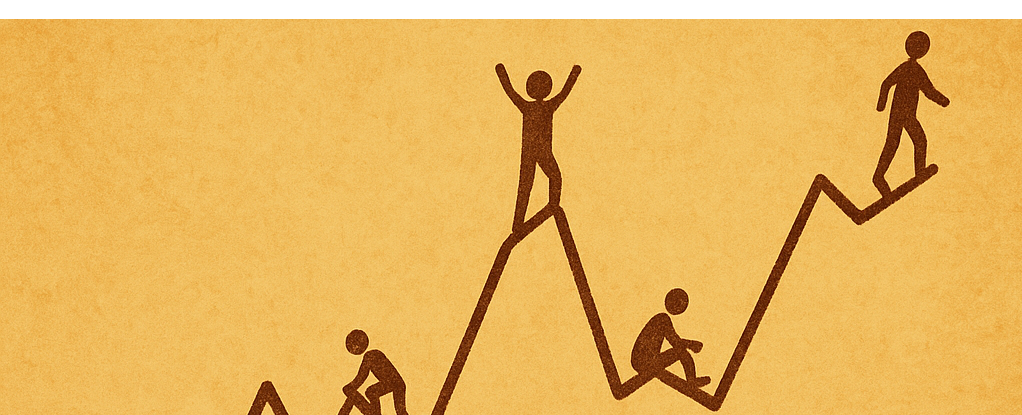
Healing is not linear. It’s not a straight path upward, nor is it predictable. Some days feel like breakthroughs and others like breakdowns. But this isn’t failure. This is the nature of healing. It’s complex, layered, and deeply vulnerable.
Patience isn’t passive—it’s an active choice
It takes intention and courage to choose patience, especially in a world that rewards urgency and productivity. For trauma survivors, that choice can feel even harder. Trauma often teaches us to abandon ourselves. To disconnect, dissociate, shut down, or ignore our own needs just to survive. So, to be patient is to reclaim something. It’s saying: I’m willing to stay with myself, even when it’s hard. I’m willing to move at the speed of what feels safe and true for me.
But patience also requires emotional honesty. If we’re not careful, it can become a disguise for avoidance. We might tell ourselves we’re being gentle when, in truth, we’re afraid to face the next layer of healing. Healthy, growth-oriented patience means being honest about where we are, and being willing to engage in the work when the time is right. Honesty asks: Am I resting or am I hiding? Am I being kind to myself or am I letting fear or laziness stall me out?
Hurry up and get it right!
Going slow doesn’t mean you’re doing it wrong. It may mean you’re doing it with integrity. Healing isn’t about looking good. It’s about building something real, something resilient, and something that can truly last.
We can’t shame ourselves into healing. No amount of self-criticism will produce the tenderness our wounds actually need. Self-compassion doesn’t mean we excuse harmful behavior or stay stuck in victim hood. It means we acknowledge our pain with honesty and gentleness. It means we choose to meet ourselves the way we wish someone had met us during our most difficult moments.
It can be tempting to think of healing as a destination. Something we must earn, complete, or prove, or an end point we need to reach. Every small act of courage counts. Every boundary you hold, every moment of kindness toward yourself, every act of accountability, every time you ask for help, every time you pause before reacting… That’s healing. That’s progress. So even before you’re supposedly done, you’re in the process. You’re doing it.
You are healing!
We just have to keep showing up with patience, compassion, and honesty. When we fall, which we all do, we can get up and try again.
You are not broken. You are healing. And in that healing, there is immense beauty. Let it unfold in its own time. You are worth the wait.